The assessment
Healthy building assessment
A comprehensive technical assessment of the environmental conditions of a space.
It objectively assesses the physical, chemical and biological factors present in a building and how they relate to one another. The scope is defined before work begins, according to the property, the client’s needs and the objective of the assessment.

What it is
An assessment is not a series of measurements.
Measuring is part of the work, not the whole of it.
The value of an assessment lies in understanding the case, inspecting the building, deciding what needs to be assessed, measuring or sampling what is appropriate, interpreting the results together and turning them into practical recommendations.
Measurements are part of the assessment; they are not a service separate from the assessment process.
Scope
What an assessment can include
Three areas that can form part of the same assessment, depending on the case.
Physical factors
Measurements of the physical factors relevant to the case, selected during the technical inspection.
Chemical factors
Direct measurements and, when the pollutant requires it, sampling for analysis in a specialist laboratory.
Biological factors
Inspection, measurements and sampling related to moisture and biological contamination.
Process
How we carry out the assessment
- 01
Understanding the case
Before the visit we gather information about the property, the client’s concerns and the objective of the assessment. With that, we define the scope and the quotation.
- 02
Technical inspection
At the property we analyse its characteristics, its installations and possible environmental sources, inside and outside the building.
- 03
Measurements and sampling
We use professional instruments specific to each parameter. When a pollutant requires specialist analysis, samples are taken for the laboratory.
- 04
Interpretation
The results are analysed together and related to the characteristics of the property and the use of each space.
- 05
Report and recommendations
We document the results and propose improvement measures that are technically sound and suited to the building.
Variants
Specific situations
These are forms of the healthy building assessment adapted to a particular objective, not separate services.
Method
Methodology and instruments
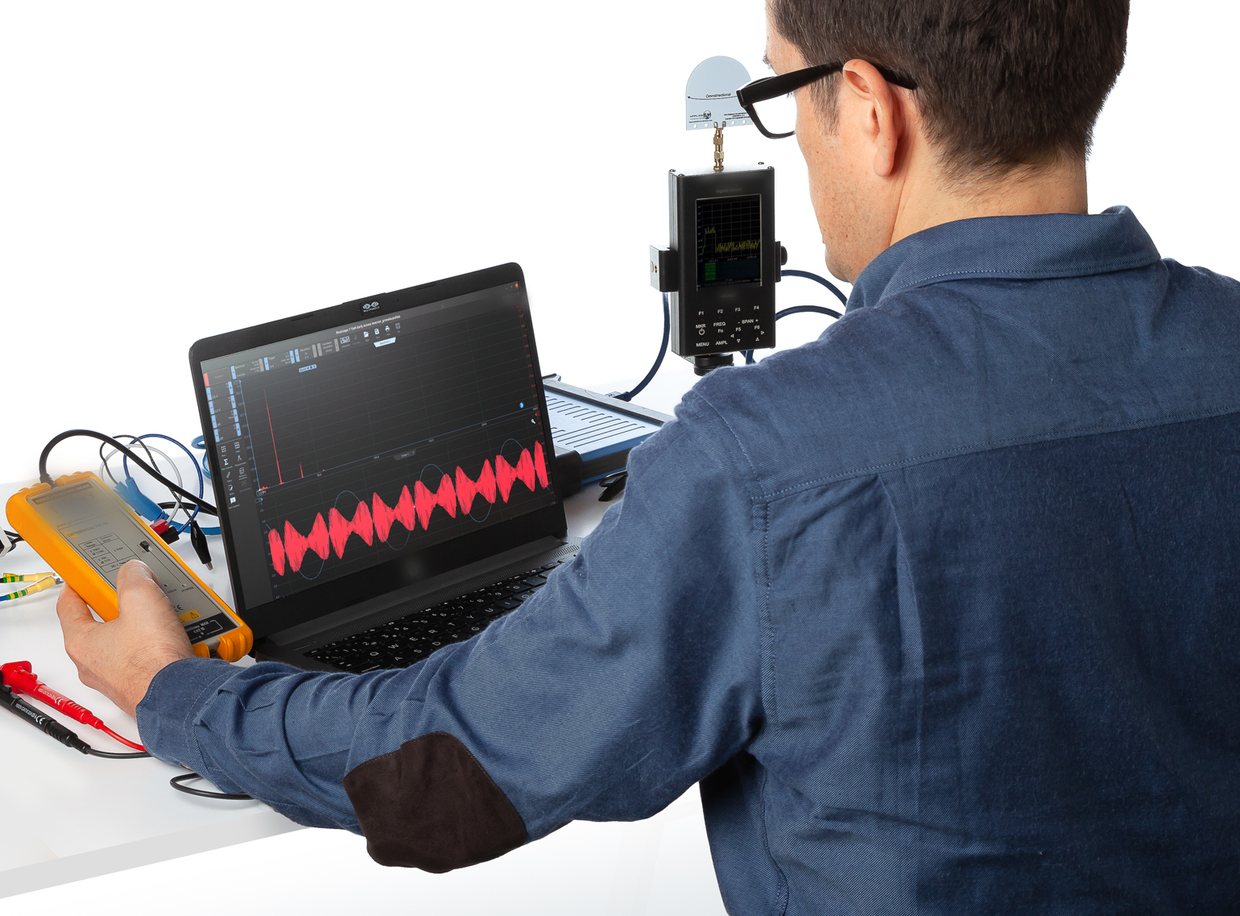
Cemprotecta applies its own consistent assessment methodology: understand the case, inspect the building, decide what needs to be assessed, measure or sample, interpret the results together and document them.
Assessments mainly follow the measurement protocol of the German technical standard SBM-2024 (Standard der Baubiologischen Messtechnik), developed by Baubiologie Maes together with the Institut für Baubiologie + Nachhaltigkeit (IBN). Within that framework, each factor is assessed against its own technical criteria. When a pollutant requires specialist analysis, samples are taken for laboratory study.
Instruments are selected according to the parameter to be assessed. When an assessment is intended as expert evidence, calibrated instruments are used where necessary to ensure the traceability and reliability of the results.
We do not publish details of the equipment or the measurement procedures: they are part of the working method and their choice depends on each case.
Deliverable
What the client receives
At the end of a standard assessment you will receive a technical report in PDF format.
Any follow-up is agreed in advance when the case requires it.
- Results of the measurements taken.
- Technical interpretation of the results.
- Recommendations to correct or reduce what has been found.
- Photographs where they help to clarify an anomaly.
- Sections of plans when the assessment includes geological disturbances.
Timing
Duration and turnaround
These are guideline figures, not commitments. The reference home is about 100 m² with three bedrooms. The actual duration depends on the characteristics of the property, the agreed scope, the number of spaces, the measurements required, the specific needs of the assessment and any complications that may arise.
Quotation
What the quotation depends on
It is defined and agreed with you before the assessment is carried out.
We do not publish fixed prices: an assessment tailored to a specific case is more useful than a standard package.
- Floor area and number of rooms or bedrooms.
- Factors to be assessed.
- Need for laboratory analysis.
- Monitoring time, where needed.
- Travel to the property.
- Complexity of the case.
- Use of the assessment as expert evidence.
Typical cases
When it may be advisable
None of these situations in itself means that there is an environmental problem. They are circumstances in which a technical assessment helps to find out.
- There are doubts about the environmental quality of a home.
- There is damp, mould or persistent odours.
- After renovation work or the installation of new materials.
- There is a noise, a vibration or a phenomenon of unidentified origin.
- There is nearby infrastructure that you want assessed.
- Before buying or renting a property.
- During new-build or renovation work.
- To adapt a space to specific environmental needs.
- Technical documentation or expert evidence is needed.
Common questions
Frequently asked questions
Do I have to be present during the assessment?
Do we have to leave the home during the assessment?
Is any equipment left installed in the home?
How long does an assessment usually take?
When will I receive the report?
Can a standard report be used as an expert report?
We carry out assessments in Spain, Portugal and France, and in other countries on request. Tell us about your case.
Need a space assessed?
Tell us briefly about the case. Before the assessment is carried out we will define its scope and the corresponding quotation with you.